
Chainflip loses $12 million to apparent key compromise

An attacker drained $12 million from the Chainflip cross-chain swap protocol. They then immediately swapped the tokens to ETH and then laundered the assets through Tornado Cash to make them impossible for stablecoin issuers to freeze and more challenging for investigators to trace.

The transaction was signed with the protocol's signing key, suggesting that the key may have been compromised. It's not clear how that would have happened, given that the key is rotated every three days, and each of the protocol's 150 validators is only supposed to have access to a portion of the key. 100 out of the 150 are needed to sign transactions.

In a message to the attacker, Chainflip revealed that the total theft was around $12 million — considerably higher than early estimates by blockchain researchers of around $4.9 million. Chainflip also said they had "identified the mechanism of key exposure and have prevented such future attacks", though they have not published their findings.

Chainflip offered a 10% "bounty" for the return of the funds, and threatened the thief with law enforcement action.


K3 Capital's yield-bearing sBOLD vault drained in flash loan attack

Attackers using flash loans drained nearly the entire $3.43 million from a yield-bearing Ethereum vault run by K3 Capital. They exploited a bug in the vault's pricing logic that ignored collateral it held below a set amount, allowing an attacker to deposit small amounts of wETH that weren't counted toward the pricing calculations. They then were able to swap those deposits into BOLD, a dollar-pegged stablecoin, causing prices to increase and allowing them to cash out larger and larger amounts.

After the original theft transaction, a series of copycats joined in, and the vault was drained within minutes. K3 Capital paused the vault 40 minutes after the first transactions, well after the money was gone.

K3 Capital has published a "recovery plan" that largely consists of "ask the attackers nicely to return the funds". After that, it plans to divvy up whatever assets it gets back among investors in the vault — likely far below what they put in.

K3 Capital describes itself as "one of the largest crypto-native asset managers". It was co-founded by Kiril Nikolov, formerly of Nexo, in 2021.

Lighter user(s) exploited for $15 million

An attacker drained at least one market maker account on the perpetual futures exchange Lighter. One account was emptied of around $10.4 million, and another may have lost about $5.1 million, according to blockchain researchers. Lighter has attributed the theft to a "leaked API key for a specific trader's account", though they did not confirm the amounts stolen or address researchers' identification of a second affected account.

Lighter's security council activated "Guardian mode", pausing withdrawals, which they say prevented the attacker from cashing out about $5 million of the assets. However, the attacker was still able to swap $10.4 million of the stolen assets to ETH.

Kava Lend exploited for $3.8 million

An attacker drained around 55.2 million KAVA (about $3.8 million) from Kava Lend, the Kava blockchain's native lending protocol. Kava Lend had continue to offer a BUSD-based lending market years after Paxos stopped minting the Binance-branded stablecoin, and most activity had dried up.

The attacker was able to take advantage of this by first pushing the market's net supply down to a tiny fraction of a cent, where a rounding error then caused the protocol to count each BUSD deposit as worth roughly 243,000 times its real value. The attacker then took out 127 loans against the erroneous value. The attacker quickly bridged most of the tokens to BNB Chain dumped them for about $2.1 million.

DataVault AI's stock crashes after it says it can't access its own bitcoin

Datavault AI markets itself as a "data sciences" and "Web 3.0" company that is "harnessing the power of supercomputing to subordinate AI" but also apparently working on real-world-asset tokenization (including an attempt to tokenize a fleet of AI data centers) but also I guess developing audio technology for live events and data-over-sound applications. Outside of their own press releases, it looks like their business plan is mostly to just hold bitcoin, use a lot of fancy buzzwords, and hope their stock price goes up.

Or at least that was the plan, until they disclosed in an SEC filing that that bitcoin may never have been theirs. It came from a September 2025 deal in which pain medication and, apparently, crypto treasury company Scilex Holding bought around 279 million Datavault shares for $150 million in BTC. Rather than sending any coins on-chain, Scilex just credited around 1,309 BTC to Datavault's account at the little-known Biconomy exchange. Biconomy had itself paid Scilex in bitcoin for $200 million of stock in a Scilex subsidiary just days earlier. On October 26, Datavault disclosed that it hasn't been able to withdraw the bitcoin since June. Neither Datavault nor Biconomy has explained why Datavault was unable to complete the withdrawal. Datavault has told the SEC it intends to restate its financial statements for every period since the transaction, and warned that without the bitcoin on its books, it may not be able to stay in business.

The stock halved the next day, to around 7¢, down from more than $2 a year earlier. Since then, the board has ousted founder and CEO Nathaniel Bradley, who is now suing the company, and Nasdaq has suspended trading in the stock for failing to meet its minimum share price.

Initia suffers second exploit less than a month after the last

On November 2, as the project came back online from a $2.7 million exploit, Initia tweeted "We are so back." On November 10, the Initia networks were once again halted after another hack, this time in which an exploiter stole $3.27 million. According to Initia, the attacker exploited a command-injection vulnerability using a compromised Google Cloud key, which exposed environment variables and granted them access to Initia's GitHub and other cloud accounts. From there the attacker got into Anvil, the platform that hosts Initia's rollups, and approved fake withdrawals that released escrowed assets.

Initia said about $2.16 million of what was taken was frozen when the project again halted its layer-1 chain. At least $615,000 of the remaining amount was sold on Initia's DEX and withdrawn. As with the first hack, Initia kept its blockchains offline for an entire ten days. Although they posted that they had spent the time "harden[ing] security at every layer of the stack while auditing and rebuilding our infrastructure alongside security professionals", the response was less than enthusiastic: "No body cares its finished" and "scam".

Initia is backed by Binance Labs, Delphi Ventures, and at least six others. The company, started by ex-Terraform Labs developers raised an undisclosed amount of pre-seed funding from Binance Labs in October 2023. In February 2024 they raised a $7.5 million seed round, and they raised another $14 million in a Series A round in September of that year. However, the project's TVL has plummeted from its $40 million peak in May 2025 to below $3 million for most of 2026.

Mercado Bitcoin halts withdrawals after $40 million hack

Brazil's largest crypto exchange, Mercado Bitcoin, suspended deposits and withdrawals on November 2, citing a security incident. Researchers have estimated the loss at about $49 million, though around $10 million was frozen by centralized stablecoin issuers. The exchange has said it will cover the loss from its own funds.

The attacker emptied hot wallets across at least ten blockchains in roughly 25 minutes. A second wave of attacks drained customer deposit addresses on Ethereum, and those transfers continued for about four hours after the exchange said the incident had been contained.

French bank Crédit Mutuel Arkéa hit in $133M crypto theft

Blockchain investigator ZachXBT posted on November 2 that an EU entity had lost over $106 million from accounts at several crypto exchanges on November 1, with funds withdrawn in the USDC and USDT stablecoins. He later added a further $27 million in exchange withdrawals tied to the theft, bringing his estimate above $133 million.

According to ZachXBT, the attacker swapped USDC for ETH, moved funds through instant exchanges, converted some into the Monero privacycoin, and bridged funds across multiple chains to make them harder to trace. He accused the institution of not having made "proper incident disclosure", which he said let approximately $30 million in stolen funds go unfrozen by law enforcement when they could have been recovered.

A day later, the French bank Crédit Mutuel Arkéa confirmed it had been hit by a cyberattack that allowed "fraudulent operations", but did not mention crypto. The bank, which has been preparing to enter the crypto sector, later told Reuters that around €100 million ($112.6 million) had been stolen via "fraudulent transactions", and that the funds were not originally in the form of cryptocurrency but may have been swapped to crypto after the theft.

Polymarket users' funds stolen, again

Polymarket users have lost a combined, estimated $2.65 million after a Polymarket exploit. The company acknowledged there had been "an incident" and put the site into "cancel-only" mode, meaning that all bets were disabled outside of cancelling them. They later, once again, claimed that the issue is due to the compromise of a "third-party provider", and re-enabled trading after about an hour.

This is the second time Polymarket users have lost funds due to exploits Polymarket has blamed on third-party vendors. In June, customers lost almost $3 million after a malicious script was injected into the frontend. They reimbursed user losses then, and have said they will do the same in this incident as well.

North Korea hacks Binance for around $6.3 billion, some frozen

Binance has confirmed that an attacker exploited the exchange, stealing around $6.3 billion from multiple hot wallets. The theft has set the new record for the largest crypto theft.

Luckily for Binance, Tether and Circle quickly began freezing some of the exploiter's wallets. Tether froze at least $1.567 billion of the roughly $1.768 billion in stolen USDT, and Circle froze around $800 million of the $823 million in USDC. Binance estimated that $3 billion in total was frozen, though some other networks that have frozen assets are preventing the attacker from cashing out, but may not be able to easily restore them to Binance.

Binance founder Changpeng Zhao, who is not legally allowed to run the exchange yet seems to remain very closely aware of its inner workings, posted early estimates of the freezes and wrote, "I don’t manage Binance (.com) anymore, but as a shareholder, I expect all user funds will be fully covered." He later added, "Loss might be a bit higher than [$1 billion], but will cover." Binance later disclosed that they believed the exploit occurred after a devops employee's laptop was compromised.

Blockchain security firm TRM Labs subsequently attributed the attack to TraderTraitor, a North Korean state-sponsored cybercrime group also known as the Lazarus Group. They have been behind many of the largest cryptocurrency thefts, including the now second-largest hack of all time: the 2025 theft of $1.5 billion from the Bybit exchange.

Initia suffers $2.7 million loss after unauthorized mint exploit

The Initia project halted its blockchain after an attacker was able to exploit a vulnerability in the project smart contract to perform an unauthorized mint of unbacked wrapped tokens. The attacker then bridged the tokens off Initia's chain to cash out. They ultimately made off with approximately $2.7 million in proceeds from minting fake versions of AUSD, ETH, and USDC on the Initia chain and then converting it to ETH.

The project subsequently announced that its associated foundation would be covering the stolen assets to ensure all assets on the chain were fully backed. The project brought its blockchains back online on November 2, after spending a massive ten days halted. "We are so back," they announced on Twitter.

CoinDCX admits $16 million theft after claiming it was a "false alarm"

Indian exchange CoinDCX confirmed a loss of 15.99 million USDT, saying an automated process had failed to move customer deposits out of wallet infrastructure it had retired following its July 2025 breach. The exchange said it absorbed the loss itself and that customer balances would be unaffected.

Before admitting the loss, co-founder Sumit Gupta refuted crypto investigators' concerns about a hack, writing on Twitter that CoinDCX's wallets were "not breached" and calling the activity a "false alarm". The exchange later blamed the incident on an internal process failure.

The loss adds to the roughly $44 million CoinDCX suffered in a July 2025 hack it initially attributed to a server breach, which was later connected to a compromised engineer laptop.

Keystone to destroy 18,835 hardware wallets after website breach

Product photo of the Keystone 3, which resembles a smartphone and displays several cryptoasset logos on the screenKeystone 3 product photo (attribution)
Hardware wallet maker Keystone said it will destroy 18,835 unsold devices and suspend shipments after a website breach on October 20 exposed customer data and an authentication key built into its devices during production.

An attacker gained access through a flaw in a third-party data monitoring tool. Keystone said the breach did not expose recovery phrases, private keys, or wallet credentials, but the stolen authentication key means counterfeit devices could pass online authenticity checks. Keystone said it would replace the key in new devices. They said that devices delivered before October 20 remained safe to use if they pass authentication, but urged caution for customers who received devices using the old key after that date.

Cysic bridge exploited

A bug with the Cysic bridge let an attacker mint 10 million Cysic (CYS) tokens on BNB Chain. Cysic suspended the bridge and blacklisted the recipient address, freezing about 2.8 million of the minted tokens. The project attempted to recoup some of the stolen assets by offering a 10% "bounty". Instead, the attacker moved sent substantiall all of the stolen funds they'd been able to cash out — about $744,000 — to Tornado Cash, making Cysic's chances of recovering the assets much slimmer.

Cysic is a blockchain-based marketplace for computing resources, and is backed by Polychain Capital, OKX Ventures, and Hashkey Capital.

AI-focused Qubic blockchain halts after weak wallet seeds enable $1.4 million in thefts

The Qubic "true decentralized intelligence" project, an artificial intelligence-focused blockchain, halted on October 17–18 after an attacker exploited weakly generated wallet seeds to drain around 2.94 trillion QU (about $1.4 million) from 1,404 wallets.

Qubic said the attack was enabled by a flaw affecting wallet seeds created in its web wallet on an iPhone or iPad in any browser, in Safari on a Mac, or in the Qubic iOS app before July 2025. A third-party analysis traced the cause to Qubic's use of JavaScript's insecure Math.random() function.

Qubic said 87% of the drained funds never left the network and were frozen. The remaining 13% was sent to the MEXC exchange; Qubic says the exchange froze the receiving account within about an hour. Qubic later performed a blockchain rollback and opened a recovery process for affected holders.

Blur NFT marketplace to shut down

Blur, the NFT marketplace that overtook OpenSea in trading volume shortly after its 2022 launch, announced it will shut down its website in a month. They also announced that Blend, Blur's NFT lending platform, will stop matching new loans on the same day. Borrowers have until then to repay their loans or let them default.

The announcement comes days after the Blur team said it would also shut down Blast, its Ethereum layer-2 blockchain, because it cost more to run than it earned.

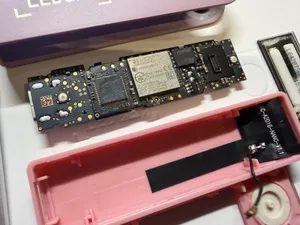
At least $86 million stolen via tampered Ledger hardware wallets resold by CryptoBilis

A Ledger hardware wallet that has been opened to reveal the original chip, plus an additional chip with an antenna that was added by an attackerA tampered Ledger device (attribution)
The users of more than 300 Ledger cryptocurrency wallets have suffered an estimated $86 million to $93 million in losses after thieves drained assets across blockchains including bitcoin, Ethereum, and Tron. Ledger is a popular manufacturer of hardware wallets — a type of physical, offline device used to store cryptocurrency keys in an attempt to be more secure than storing keys on Internet-connected devices.

Ledger has claimed that the targeted wallets appear to have been sold via CryptoBilis, a Southeast Asian reseller that operates in Indonesia, Malaysia, and the Philippines. Ledger said that at least one affected device "contained an unauthorized hardware implant". Several third party researchers disassembled affected hardware devices, finding that a chip and antenna had been added to capture crypto wallet seed phrases and transmit the data to the attacker using a cellular connection.

Pudgy Penguins company shuts down its Abstract blockchain after losing "8 figures" running it

An illustration of a smiling penguin wearing a pink scarf with a blue dead fish on its head.Pudgy Penguin #6827 (attribution)
Igloo, the company behind the Pudgy Penguins NFTs, announced it will shut down Abstract, its Ethereum layer-2 blockchain, on December 15. CEO Luca Netz said the company had lost "8 figures" in the less than two years they were running the chain.

Users have until December 15 to move their assets, after which anything left on the chain will become inaccessible. DefiLllama estimates there were around $76 million in assets on the chain when the shutdown was announced, leading some users to complain that the wind-down period is too short.

The shutdown comes a few months after Igloo shut down its Pudgy Party mobile game, which had dropped to around 200–300 active users shortly after its launch, and also lost the company millions of dollars.

Blur shuts down its Blast blockchain

Blast, the Ethereum layer-2 created by the team behind the Blur NFT marketplace, is shutting down less than three years after launch. In the announcement, they disclosed that its costs now exceed its revenue and that it sees "no credible path" to fixing that. Despite once boasting of more than $2 billion in total value locked in June 2024, generating revenue from network usage of around $3.5 million, that revenue has collapsed to less than $2,000 last month.

Porsche shuts down its NFT project with the floor price down 96%

When Porsche announced its Porsche 911 NFT project at Art Basel Miami in 2022, it promised holders "he opportunity to co-create Porsche's future in the Web3 universe". Turns out there wasn't much to that future.

After bungling the mint, selling fewer than 2,000 of the planned 7,500 NFTs after buyers balked at the 0.911 ETH (then $1,490) pricetag, the price went nearly exclusively downhill. Now, with the NFTs floundering with floor prices down 96% from launch, Porsche has announced it is ending its "shared adventure".

Near Intents exploited for $3.8 million, recovers all assets

Near Intents, a cross-chain swap service, halted operations after an attacker drained around $3.8 million by exploiting a bug in its Omni layer.

The next day, Near Intents posted addresses for returning the funds and threatened the attacker: "We have identified you, sir." The attacker returned everything the next day, in a transaction that included an on-chain message saying "We've returned all the funds, we were in the wrong". Near Intents confirmed the funds were returned, and said they were stopping their investigation.

Abracadabra proposes winding down after string of hacks years ago left each $1 "stablecoin" token backed by $0.04 in reserves

Abracadabra, the defi project behind the Magic Internet Money (MIM) stablecoin, is shutting down. It blamed its string of hacks: $6.5 million theft in January 2024, $13 million in March 2025, and $1.8 million in October 2025, which altogether left about $21 million in bad debt. According to the shutdown proposal, 22 million MIM are in circulation, backed by just $900,000 in "actionable backing" which puts the supposedly dollar-pegged token at about $0.04. Two wallets voted on the proposal.


In June, a similarly low-participation vote handed "stewardship" of the project to a different group which promised to "revitalize" Abracadabra. Days later, treasury wallets sold around $500,000 worth of MIM. In July, the project tweeted that a roadmap to restore the peg was "coming this week," then never posted again. A week after that tweet, Abracadabra-controlled wallets moved about $8.3 million in treasury assets with no explanation, some of it to a Binance deposit address, in what one commentator called "treasury looting". The wind-down proposal doesn't mention the $8.3 million or count it toward what MIM holders could redeem.

Magic Eden users lose NFTs and $1.8 million in wETH to legacy approvals exploit

A Bored Ape-style illustration of an ape with blue skin, brown shoulder-length hair, a grimace with red lipstick, bloodshot heavy-lidded eyes, a skull-print scarf, and a nurse's topAll my Desperate ApeWives gone :( (attribution)
Exploiters took advantage of a legacy approvals bug in an old payment processor called Limit Break, which the platform had stopped using in late 2024. The bug affected listings on Magic Eden's EVM marketplace, which the company had shut down earlier this year. The attackers were able to steal numerous NFTs, including 10 Meebits, 50 Otherdeeds, 10 World of Women, and 235 Desperate Apewives. Attackers also subsequently stole 660 wETH (~$1.78 million).

A whitehat rescue spearheaded by blockchain researcher 0xQuit took control of 23,155 NFTs he estimated to be worth "north of $5.7M USD", which he said would be returned to their owners after they revoked the permissions that made the assets vulnerable to theft.

Meter token prices crash after unauthorized mint

An exploiter was able to mint unbacked wrapped MTR and MTRG tokens, notionally priced at more than $2.3 million. They sold some of the tokens on a decentralized exchange, crashing the MTRG price by more than 88%. The price of the project's MTR token — which is supposed to maintain a stable price based on the cost to produce 10 kWh of electricity — also plummeted by approximately the same percentage. Meter has attributed the exploit to a "block validation flaw".

Meter paused the blockchain and bridge, and has urged people not to trade the token. They have warned that "Transactions after block 100731417 may not be honored", suggesting they are considering a blockchain rollback.

Meter suffered another bridge attack in February 2022, which amounted to $4.3 million.

Payy Network bridge fully drained of $1.8 million

The Payy Network, a stablecoin infrastructure company, disclosed that a bridge contract had been fully drained of funds, netting attackers $1.8 million. They later stated that the theft was "NOT a compromised key, social engineering or exploit of our off-chain infrastructure," but has not disclosed what it was. They also announced that the stolen funds were "users' non-custodial deposits to Payy Network / Payy Wallet", which is somewhat of an oxymoron.

Payy Network has halted all activity following the attack.

Duelbits crypto casino goes offline after $7 million theft

The Duelbits crypto gambling site lost around $7 million to an apparent hot wallet compromise. The site went offline shortly after the attack, and the company has said the site will stay offline "until we have clarity". The Curaçao-based platform offers casino games and sportsbetting.

Bitget crypto exchange hacked for $388 million, pauses withdrawals

Attackers stole $387.5 million in crypto assets from Bitget, a cryptocurrency exchange originally founded in Singapore and headquartered out of the Seychelles. Centralized stablecoin issuers Circle and Tether (issuers of USDC and USDT) froze $318,000 in stolen assets, but the vast majority were swapped to decentralized cryptocurrencies and have not been frozen.

Bitget CEO Gracy Chen has said the company believes that a North Korean cybercrime group may be behind the theft. Bitget halted withdrawals shortly after the theft was noticed, citing the need to prevent attackers from stealing more assets. Bitget has said they have sufficient assets to cover the stolen funds.

Projects on the defunct Neutron chain lose $1.8 million to governance attack, Cosmos Hub halts chain

Neutron, a blockchain in the Cosmos ecosystem that entered maintenance mode in June, suffered a governance attack when someone spent $20,200 to acquire enough NTRN governance tokens to pass a vote allowing them to take control of the Neutron-based Astroport and Drop applications, whose contracts contained a combined $9.5 million in assets.

Neutron was paused shortly after the attack, and validators subsequently paused the entire Cosmos Hub network. Together, the pauses prevented the attacker from cashing out the entire amount, though they successfully made off with $1.8 million that they were able to bridge to Ethereum prior to the pause. Cosmos Hub remained paused for approximately 24 hours. During the pause, validators coordinated to move approximately 1.73 million ATOM from the attacker's wallet to a multi-signature wallet controlled by a group of companies operating network validators.

Single attacker steals $2.25 million from three crypto projects in the "Artificial Superintelligence Alliance"

One attacker stole crypto tokens from three cryptocurrency projects that are part of what's called the "Artificial Superintelligence Alliance" — a group of crypto projects "dedicated to decentralized Artificial General Intelligence". The attack occurred within just one day, netting around $2.25 million in actual profits, though the stolen tokens were notionally priced considerably higher.

Most of the profits came from stolen FET tokens, which are linked to Fetch.ai. The attacker was also able to perform unauthorized mints of various tokens, crashing their prices but earning the attacker little in the way of profits. Security researchers noticed that attackers stole assets from sixteen wallets spanning the three companies, suggesting they had significant access to all three companies' systems. Almost $290,000 was taken from a contract used for company payroll.

4,000 BTC (~$320 million) stolen from Liquid Network by claimed whitehats, 90% returned

An unauthorized withdrawal of 3,998.5 BTC (~$320 million) from the Liquid Network, a bitcoin sidechain, prompted a network halt. By disabling nodes that bridge between Liquid and the bitcoin mainchain, attackers are limited in their ability to cash out via bridge. Blockstream, the developers of Liquid Network, also said they had contacted exchanges to ask them to pause LBTC deposits and withdrawals, cutting off another avenue.

The unauthorized transaction included a message reading "we are whitehats. contact us on chain", suggesting the possibility that the withdrawal was in fact well-intentioned security researchers aiming to "rescue" funds after discovering they were vulnerable and then return them to a secure wallet. After some back and forth, the attacker returned 3,400 BTC (~$272 million) keeping 600 BTC (~$48 million), likely as a "bounty".

More Markets exploited for $9.3 million

Defi lending project More Markets lost $9.3 million after an attacker was able to trick the lending protocol logic and empty the project's reserve. The attack was noticed by blockchain security researchers at Blockaid; More Labs later announced they were investigating. Oddly, while acknowledging that funds had been stolen, they wrote, "Our initial investigation reveals that MORE was not exploited. MORE's contracts are secure. MORE is solvent. The protocol is paused." They claimed that only 5% of the assets were bridged out of the Flow blockchain, though did not explain how they planned to prevent the attacker from moving more tokens or collapsing the token price entirely.

Crypto.com-affiliated Cronos blockchain halted after Tectonic theft

The ostensibly decentralized Cronos blockchain was halted after a price manipulation attack allowed an attacker to borrow around $120 million against nearly worthless collateral from the Tectonic lending platform. The attacker pumped the price of the thinly traded TONIC token, the native token of Tectonic, then borrowed against it. The attacker cashed out approximately $9.19 million by bridging it to Ethereum before the Cronos chain was halted, limiting their profits. The blockchain was offline for almost 24 hours, during which time it was rolled back to a block prior to the hack — essentially undoing all the transactions that occurred after that block.

Cronos was launched by the exchange Crypto.com in 2021, and although the two entities are technically separate, they remain very closely linked. Because the Cronos chain is maintained by a relatively small number of validators, many controlled by Crypto.com, it was relatively easy to halt the chain — though the move was criticized by some who felt that it only illustrated Cronos' lack of decentralization and immutability. Some criticized the decision to halt the chain for nearly 24 hours over an exploit of a third-party protocol.

Exploit on Rain crypto payments infrastructure provider causes losses for "self-custodial" neobanks

A vulnerability in a smart contract belonging to Rain, a crypto payments infrastructure provider, resulted in $1.1 million in losses to various firms. Customers of the Avici cryptocurrency neobank, which offers a Visa credit card through which customers can spend crypto, suffered roughly $500,000 in losses. Customers of another neobank, Tria, lost more than $430,000.

The losses are somewhat unusual because the neobanks describe themselves as self-custodial, which normally means that customers have total control over their crypto assets rather than storing them on a third-party platform. Normally, self-custody is more resilient to exploits like this, given that assets remain in user wallets. However, because these neobanks require customers to load funds they want to be able to spend into a third-party contract, they were vulnerable to the theft.

Moonwell loses $8.7 million to fourth exploit in less than a year

An attacker stole around $8.7 million from the Moonwell defi lending protocol after manipulating the price of an illiquid token called MAMO. After pumping the MAMO token price, they "borrowed" various assets and abandoned the overinflated collateral.

This theft is the fourth Moonwell exploit in less than a year, following a $3.7 million oracle manipulation attack in November 2025, another oracle attack in February 2026 amounting to $1.78 million, and a $1 million governance attack in March.

Term Finance loses $8.5 million to governance attack

Ethereum lending protocol Term Finance lost around $8.5 million when an attacker purchased the majority of the project's governance token — which was not widely held — and then voted themselves to be the controller of the project's vaults. Although the project has governance safeguard, including a timelock and veto procedure, neither went into effect for reasons the project has yet to explain.

The attacker withdrew around 2,843 ETH (~$6.9 millon) and $1.68 million in the USDC stablecoin, amounting to about 68% of assets on the platform.

Term Finance previously lost $1.65 million to an oracle misconfiguration error in April 2025, but recovered $1 million of the funds.

KiiChain, TAC, and other Cosmos-based blockchains exploited after "negligent" vulnerability disclosure

Multiple blockchains based on the Cosmos chain suffered exploits after Cosmos Labs publicly disclosed a vulnerability in the Cosmos EVM. Some have criticized Cosmos for "negligence" in their vulnerability management. KiiChain, one of the affected chains, wrote in their postmortem, "This loss was avoidable. ... Publishing a security fix in the open, before the chains running that code have been told privately and given time to patch, hands the vulnerability to anyone reading the commit. Standard responsible disclosure exists precisely to prevent this. Cosmos Labs gave no advance notice to downstream chains, did not flag the release as security critical, and did not tell affected chains that a public release had happened until Friday 21 August, two days later."

KiiChain was exploited for around 148 million KII, which the attacker was able to cash out for around $1.6 million. TAC, a Telegram-focused blockchain, was exploited for about 3 billion TAC (~$7.5 million). Nesa Chain was exploited, and though an attacker was able to steal tokens nominally worth $50 million, lack of liquidity limited their profits to around $60,000. A blockchain called MANTRA also halted due to an exploit, but the network said that no user funds were impacted.

BounceBit exploited for $3 million, announces shutdown and migration

An attacker took advantage of a bug in the authorization logic for the BounceBit layer-1 blockchain, allowing them to transfer around 286.5 million BB (~$3 million) from nine wallets. BounceBit halted the blockchain shortly after, then later announced they would be permanently shutting down the chain and reissuing tokens on Binance's BNB Chain. "Maintaining a standalone Layer 1 is no longer the most effective way to serve our users," they said. They explained that it would be challenging to patch the underlying flaw because the chain was based on Evmos, an Ethereum blockchain implementation that was shut down in May.

BounceBit, a bitcoin restaking protocol, raised $6 million in seed funding in 2024 from Blockchain Capital, Breyer Capital, Bankless Ventures, OKX Ventures, HTX Ventures, and others.

$1.76 million stolen from MAYAChain in attack exploiting six bugs

The Maya Protocol announced that an attacker had stolen 20 BTC (~$1.4 million) and various other assets totaling $1.76 million. A postmortem disclosed that the "sophisticated attacker exploited six chained bugs" to steal the assets. "The bugs exploited were not caught by Halborn audit, nor Fable 5 audit", wrote Maya founder on Twitter. Halborn is a blockchain security firm; Fable 5 is an AI model developed by Anthropic.

Ravencoin rolls back blockchain after exploit

Attackers exploited a vulnerability in Ravencoin, a blockchain based on the bitcoin codebase, to mine invalid blocks. Although Ravencoin subsequently patched the bug, the blockchain contains roughly four days of invalid history.

Two mining pools largely control the Ravencoin mining, and have already begun rolling back the blockchain to a point prior to the invalid blocks. This is a controversial move in the crypto world, where immutability is considered sacrosanct. It's also disruptive, because legitimate transactions during that time period will be undone, with coins returned to the origin wallets. Several exchanges have halted RVN withdrawals and deposits, anticipating potential issues.

Harmony token plunges 40% after unauthorized mint

An attacker was able to exploit the Harmony blockchain to mint 4 billion of the network's $ONE token. The massive increase in token supply caused the token price to plunge 40%.

Harmony paused its token bridge and asked exchanges to freeze tokens coming from four addresses connected to the attacker. They also said they were considering a possible rollback — that is, reverting the blockchain to a pre-attack state, undoing all transactions since that point. This is a very controversial choice in the crypto world, where blockchains are prized for their immutability. It also becomes less effective if attackers are able to move tokens off the network before the rollback happens.

This is the second time Harmony has had mint-related issues. In January 2024, a bug caused around 150 million $ONE to erroneously be minted and distributed to 79 wallets. And in June 2022, Harmony suffered a $100 million theft, later attributed by the US FBI to North Korean hacking groups.

Coinsbuy exploited for $8 milllion

The Coinsbuy crypto platform was exploited for around $8 million across both the Ethereum and Tron blockchains. The attacker was able to steal the funds from eight wallets belonging to the exchange. The wallets were later replenished by Coinsbuy, suggesting that the attack vector did not involve compromising the wallets themselves.

Coinsbuy has said that the vulnerability has been addressed, and offered a $100,000 "bounty" for the returned funds.